

Browse All GPU Server Locations

NVIDIA H200 GPU Servers: Scale AI Inference with 141GB HBM3e

Deliver up to 2x faster LLM inference with 141GB of ultrafast memory and 4.8 TB/s bandwidth. Run your heaviest generative AI workloads with zero latency compromise on dedicated, bare-metal hardware.

10 000+

Satisfied Clients

Over 20 Years

of Experience

250+

Locations

150+

Bandwidth Providers

border

Rent Bare Metal NVIDIA H200 Servers Pricing & Configurations

Compare pricing for our NVIDIA H200 GPU nodes. All dedicated servers include unmetered 1Gbps bandwidth, enterprise-grade NVMe or SSD storage, and full root access for seamless AI model training and HPC workloads.

AMD EPYC 9554P
AMD EPYC 9554P
PID: 1740 | DC-252
3.10 GHz 64Cores 128Threads
Amsterdam Amsterdam
NVIDIA H200 - 141GB HBM3e
RAM512GB
Storage8TB SSD
Bandwidth1Gbps / 10TB
$4,190 /mo
AMD EPYC 9554P
AMD EPYC 9554P
PID: 1741 | DC-252
3.10 GHz 64Cores 128Threads
Hague Hague
NVIDIA H200 -141GB HBM3e
RAM512GB
Storage8TB SSD
Bandwidth1Gbps / 10TB
$4,189 /mo
NVIDIA H200 Tensor Core GPU for AI Training

Why Upgrade to the NVIDIA H200?

For AI engineers running foundational models, compute power isn't the primary bottleneck anymore—memory is. The H200 directly addresses memory-bound workloads.

By moving to 141GB of HBM3e memory per GPU, you reduce the need to shard large models across multiple nodes. This consolidation lowers infrastructure complexity. It also cuts total cost of ownership (TCO) because you achieve nearly double the token throughput within the exact same 700-watt power envelope as the prior generation.

Key Features of NVIDIA H200 Dedicated Servers

141GB HBM3e Memory

A 76% capacity increase allows you to fit heavier weights into memory and avoid multi-node communication latency.

4.8 TB/s Memory Bandwidth

Directly accelerates the token generation phase. You get sub-millisecond latency for live production APIs.

900 GB/s NVLink Connectivity

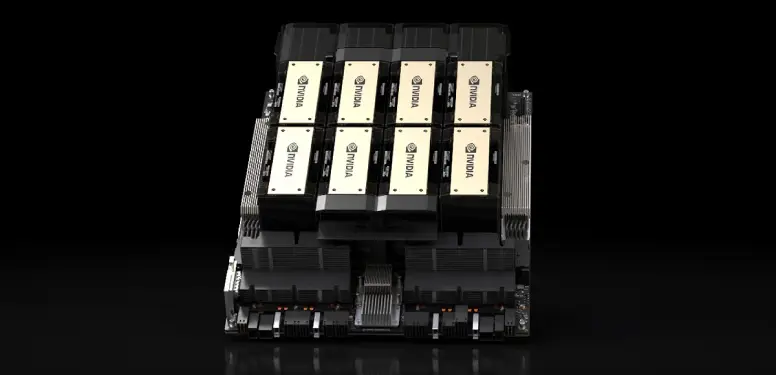
High-speed interconnects link up to 8 GPUs per HGX node. This creates a unified 1.1TB memory pool for massive distributed tasks.

Bare-Metal Isolation

Single-tenant hardware eliminates noisy-neighbor interference. You get guaranteed performance SLAs without hypervisor overhead.

Transformer Engine

Dynamically adjusts between FP8 and FP16 precision during runtime to maximize speed while protecting mathematical accuracy.

Technical Specifications of NVIDIA H200

Technical Specifications of NVIDIA H200
Feature Specification
GPU Architecture NVIDIA Hopper
Memory Capacity 141GB HBM3e
Memory Bandwidth 4.8 TB/s
NVLink Bandwidth 900 GB/s
Form Factors SXM (up to 700W) and NVL (up to 600W)
Multi-Instance GPU (MIG) Up to 7 isolated instances

NVIDIA H200 vs. H100 What Changed?

The compute cores remain largely unchanged between generations, as both GPUs are built on the exact same Hopper architecture. The fundamental shift is the memory subsystem. When serving large AI models, the H100 often ran out of memory capacity long before maxing out its compute cores.

The H200 fixes this imbalance. Moving from 80GB to 141GB capacity and upgrading from HBM3 to HBM3e allows the GPU to stay fed with data, maximizing hardware utilization and effectively doubling inference speed.

Technical Comparison: H100 vs H200
Specification NVIDIA H100 (SXM) NVIDIA H200 (SXM) Generation Upgrade
Architecture Hopper Hopper Same Foundation
Memory Capacity 80GB HBM3 141GB HBM3e + 76% Capacity
Memory Bandwidth 3.35 TB/s 4.8 TB/s + 43% Bandwidth
NVLink Interconnect 900 GB/s 900 GB/s Identical
FP8 Compute (Sparsity) 3,958 TFLOPS 3,958 TFLOPS Identical
Max Power Draw (TDP) 700W 700W Identical (Zero upgrade tax)

Ideal Workloads and AI Use Cases

Large Language Model (LLM) Inference


Serving 70B+ parameter models requires massive Key-Value (KV) cache sizes. The expanded memory allows for significantly larger batch sizes and extended context windows without triggering out-of-memory (OOM) errors.

Retrieval-Augmented Generation (RAG)


RAG architectures demand constant, rapid data movement between the embedding model and the LLM. The 4.8 TB/s memory bandwidth prevents data transfer bottlenecks, ensuring real-time response rates for enterprise search tools.

Generative AI Training & Fine-Tuning


Leveraging the onboard Transformer Engine and FP8 precision, these servers accelerate model fine-tuning. They dynamically switch compute precisions to balance processing speed with output accuracy.

High-Performance Computing (HPC)


Beyond AI, the massive memory pool speeds up complex scientific simulations, weather forecasting, and genomic sequencing that previously stalled waiting for data transfers.

Frequently Asked Questions

Common questions about renting NVIDIA H200 Dedicated Servers

The SXM form factor draws up to 700W per GPU, which is identical to the H100. This means existing data center rack power infrastructure requires no upgrades to adopt the new hardware.
High Bandwidth Memory (HBM3e) provides massive data transfer speeds. In AI inference, the token generation phase is highly memory-bandwidth bound. Faster memory retrieval equals faster time-to-first-token and smoother generation.
While you can operate both within the same data center environment, individual training jobs or tightly coupled inference tasks should run on homogeneous clusters. Mixing them within a single workload will bottleneck performance to the lowest memory tier.